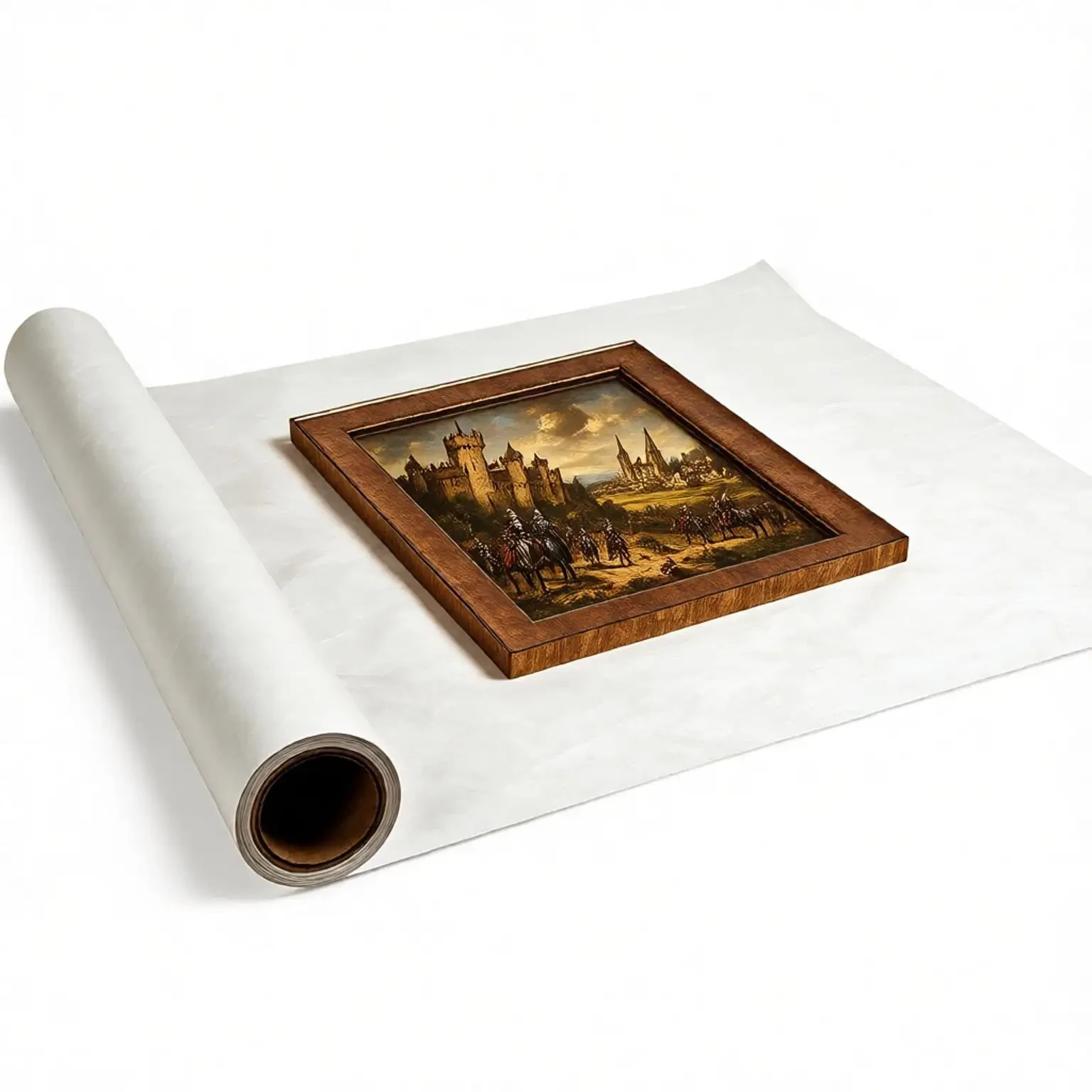
A storage enclosure chosen for the wrong reason can do more damage than no enclosure at all. Sealed plastic traps moisture against paper, some films migrate plasticiser into adjacent objects, and rough surfaces abrade fragile textiles every time a box is opened. Archival material selection is therefore a conservation decision, not only a purchasing one.
This guide sets out what archival grade should mean, where flash-spun HDPE non-woven fits in a museum or library programme, how it compares with acid-free tissue and polyester film, and how to specify an enclosure that protects rather than traps. Envelope and event-band applications are covered in the earlier parts of this series.
1. What Archival Grade Should Actually Mean
The label is not a single certification. For any material that will sit next to a collection item for decades, ask for evidence on these points:
Acid and lignin content: paper-based products should be acid-free and lignin-free; polymer products should not generate acidic by-products as they agePlasticiser and additive migration: no transfer of plasticiser or slip agents onto adjacent objectsColour transfer and staining: no dye or print that can migrate under humiditySurface stability: no loose fibres, dust or shedding that settles on artefactsOdour: no residual solvent or odour that can be absorbed by paper or textilepH neutrality for direct-contact applicationsA supplier that cannot provide test data for these points should not be assumed archival, whatever the product name says.
2. Where Flash-Spun Non-Woven Fits in a Conservation Programme
Relocation and transit: wrapping and interleaving for moves between stores, galleries and loan venuesDust and light covers: temporary protection during gallery renovation or exhibition changeoverCustom enclosures: folders, sleeves, interleaving sheets and box linings built to object sizeTextile storage: roll and flat storage covers where abrasion is a riskConservation supply products: raw material for sleeves and folders resold to conservatorsIt is not a replacement for every material. It is one option in a layered housing system.
3. Tyvek vs Acid-Free Tissue vs Polyester Film
Acid-free tissue: soft and low-cost, good for interleaving and cushioning, but tears easily and offers no liquid water protectionPolyester film (PET): transparent, inert and excellent for viewing, but non-breathable; sealing paper or textile inside can trap moistureFlash-spun non-woven: breathable, water-repellent, tear-resistant and low-lint, but opaque and not suitable where visual inspection without opening is requiredThe practical rule is to match the material to the microclimate. Breathable enclosures suit paper and textile that must buffer humidity changes; sealed film suits dry, stable objects where viewing matters more than air exchange.
4. Designing the Enclosure: Breathability, Sealing and Microclimate
Sewn edges give a breathable enclosure; heat-sealed edges give a stronger, more closed oneAvoid fully sealing hygroscopic material in a humid store; allow some vapour exchange or add conditioned silica gelLeave handling allowance so the object is not compressed or creased at the foldUse clean, dedicated tools; cutting on a shared bench transfers dust and gritLabel the outside, never write directly on the surface in contact with the object5. Handling, Reuse and Contamination Control
Wear clean nitrile gloves; skin oils transfer to both the material and the objectInspect reused material for soiling, creasing and pest evidence before it re-enters storageRetire any material that has been in contact with mould, pest activity or a water incidentStore unused stock flat, dry and dust-free; a clean roll is part of the conservation chainRecord material batch and date so future condition reviews can trace the housing6. Specification Checklist for Conservators and Suppliers
1. Confirm the grade is intended for archival contact, not general packaging.
2. Request test data for acid, plasticiser migration, colour transfer and lint.
3. Specify gram weight, width and finish against the enclosure design.
4. Order a sample and run a handling trial with a non-collection object first.
5. Agree slit widths and roll format that match your cutting or sewing workflow.
6. Check lead time against exhibition and relocation schedules, not only price.
Conclusion
Archival storage rewards restraint: the right material is the one that does not interact with the object. Flash-spun non-woven earns its place where breathability, tear resistance and low lint matter together, but it should be specified with the same evidence standard as any other conservation material.
If you are developing archival sleeves, folders or heritage packaging, contact our team for grade data, sample rolls and custom slit widths.